Pre-Winter Car Care for European Vehicles in Long Lake, MN
Most winter car care tips weren’t written with your BMW in mind. If you’re searching for a European auto repair shop near you in Long Lake, MN, the prep list for your Audi, BMW, or Mercedes-Benz looks different than it does for the average domestic vehicle, and skipping the right steps can leave you stranded when temperatures drop below zero.
At Arvu Auto, we work with European and luxury vehicles year-round at our Long Lake location. This guide walks through battery health, manufacturer-spec synthetic oil, AWD fluid condition, and winter tire selection, the four areas where European vehicles diverge most from standard winter prep advice.
Why European Cars Require Extra Attention Before Minnesota Winters
It’s not that European cars are fragile. It’s that they’re precise. BMW, Audi, and Mercedes-Benz engineer their vehicles to operate within specific temperature, fluid, and electrical ranges. When Minnesota drops into the teens or below zero, those tolerances matter.
Here’s what changes when cold hits a European vehicle:
- Battery demand spikes: Cold reduces battery output while simultaneously increasing load from heated seats, defrosters, and engine management systems.
- Oil viscosity shifts: European engines often specify thinner, full-synthetic oils. The wrong oil thickens in cold and delays lubrication at startup.
- AWD and torque vectoring systems: Systems like BMW’s xDrive and Audi’s Quattro rely on precise fluid pressures. Old or degraded fluid responds slowly in extreme cold.
- Rubber seals and gaskets: European vehicles use tight engineering tolerances; aged seals are more prone to leaks when temperatures swing dramatically.
Battery Health Is the First Thing to Check in Long Lake, MN
Why Cold Kills European Car Batteries Faster
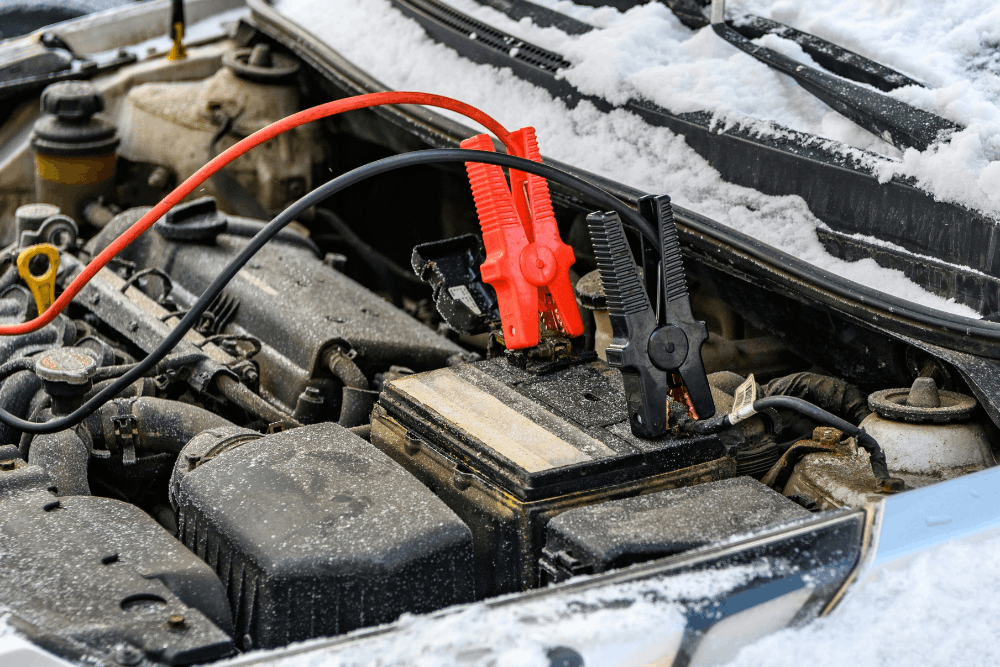
Cold weather and European vehicles have a specific tension point: the electrical load. A modern BMW or Mercedes-Benz runs far more control modules, sensors, and comfort features than most domestic vehicles. That puts continuous demand on the battery even when the vehicle is parked.
When temperatures drop, a battery that tested fine in September may fail to start your car in January. This is especially common in BMWs, which use absorbed glass mat (AGM) batteries with stricter replacement specifications than a standard flooded battery.
What this means for you: A battery that’s more than three years old should be tested before winter, not after the first no-start.
What to Know About Mercedes-Benz Battery Drain in Cold Weather
Mercedes-Benz vehicles with multiple control modules can continue drawing power even after the car is locked and parked. This is often called “parasitic drain,” and it becomes more noticeable in winter because:
- The battery’s capacity is already reduced by the cold.
- Comfort systems like heated mirrors and seat memory draw on startup.
- Stop/start system batteries (lithium-based in some models) have a narrower operating temperature range.
If your Mercedes feels sluggish to start or the infotainment system takes longer than usual to wake up, that’s a signal worth investigating before you’re stranded in a parking lot in Orono on a January morning.
Synthetic Oil: Not All European Cars Use the Same Spec
Why Oil Specification Matters More Than You Think
This is one of the most common and costly misunderstandings we see. European automakers publish specific oil approval standards, and they matter.
- BMW: Typically specifies BMW Longlife-01 or LL-04, usually a 0W-30 or 0W-40 full synthetic.
- Audi: Uses VW 502 00 or 507 00 specifications depending on the engine.
- Mercedes-Benz: Uses MB 229.5 or 229.51 approvals, often 5W-30 or 0W-40.
Using a generic oil that doesn’t carry the correct approval can void your warranty and, in turbocharged engines, cause accelerated wear. In cold weather, this matters even more because the oil must flow immediately at startup to protect precision-machined components.
The Long Lake Winter Recommendation
For vehicles in and around Long Lake, MN, where temperatures can fall well below 0°F, a full synthetic oil with a 0W viscosity rating flows at startup temperatures that a 5W or 10W base simply cannot match.
If you’re not certain which specification your vehicle requires, the team at Arvu Auto can pull the correct spec from your vehicle’s documentation and source the right oil for your make and model.
AWD System Checks Long Lake Drivers Should Not Skip
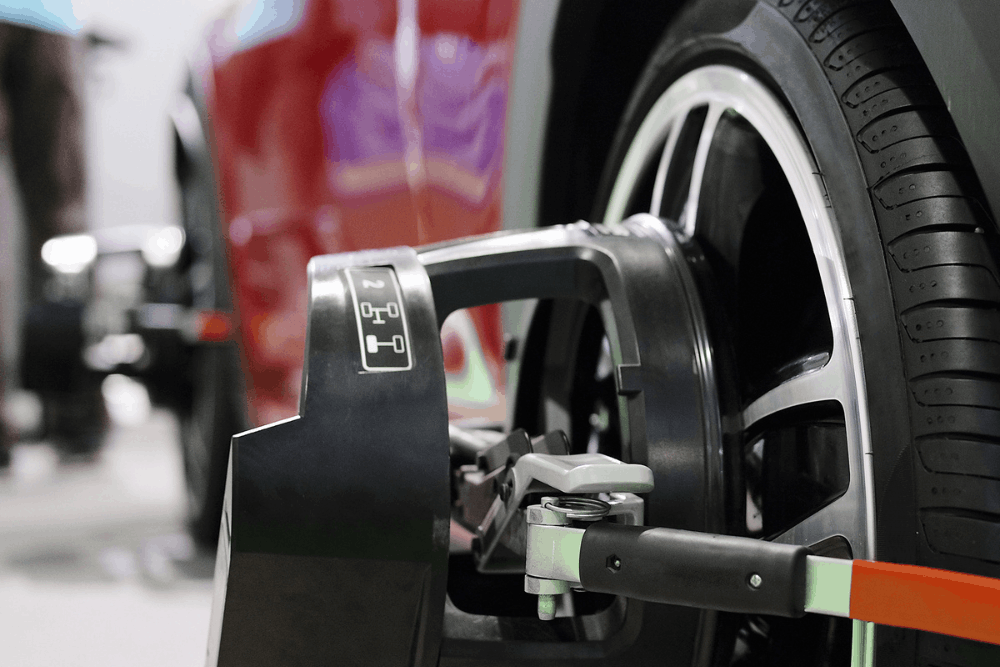
Quattro, xDrive, 4MATIC. These are excellent systems, but they rely on clean, properly specified differential and transfer case fluids to operate correctly. In cold weather, thick or degraded fluid slows the response time of the torque distribution system, which defeats the purpose of having AWD in winter conditions.
What an AWD inspection before winter typically covers:
- Transfer case fluid condition and level
- Rear differential fluid (and front, for all-wheel configurations)
- CV axle boots for cracks or leaks (cold makes cracked rubber fail faster)
- Wheel bearing condition (worn bearings become louder and more pronounced in cold)
- Brake system inspection (brake fluid absorbs moisture over time and its boiling point drops)
One detail that surprises many European car owners: mismatched tire tread depth across all four corners can force AWD systems to compensate in ways that accelerate wear on differentials and transfer cases. If your tires are wearing unevenly, that’s worth addressing before winter.
Do European Cars Require Special Winter Tires?
Yes, and not just for traction. European vehicles are typically performance-tuned, which means their all-season tires are often optimized for warm handling characteristics. Once temperatures drop below 45°F, the rubber compound in most all-season tires stiffens and loses grip, regardless of tread depth.
Winter tires designed for European vehicles offer:
- A softer rubber compound that stays flexible in sub-freezing temperatures
- Sipe patterns optimized for snow and slush evacuation
- Better performance in cold rain, which can be as dangerous as ice
Audi’s Quattro system, BMW’s xDrive, and Mercedes-Benz’s 4MATIC are all excellent, but they work with the tires you choose. A winter tire significantly extends what those systems can actually do.
At Arvu Auto, we carry and install tires for European vehicles and can recommend options that fit the correct load rating and speed rating your vehicle requires.
What Arvu Auto Brings to European Vehicle Service in Long Lake, MN
Arvu Auto serves Long Lake and the surrounding communities with a focus on European, luxury, domestic, and Asian vehicle care. If you’re in Orono, Minnetonka, or anywhere in the western Twin Cities metro, our Long Lake location handles the kind of precision service that European vehicles require.
A few things that set our approach apart:
- ASE-certified technicians who work across multiple makes, not just domestic vehicles
- NAPA AutoCare membership, which connects our shop to a nationwide parts network and supports the quality of repairs we stand behind
- 36-month/36,000-mile warranty on most repairs, so you’re covered if something unexpected comes up
- Digital Vehicle Inspections (DVIs) via AutoVitals, which give you photo and video documentation of what our technicians found during your service, so you can make informed decisions
- Loaner cars, local shuttle, and early drop-off so your schedule isn’t held hostage by a service appointment
Our goal is straightforward: give you the information and service to Drive in Confidence, then let you decide what’s right for your vehicle and your situation.
Ready to schedule your European vehicle’s winter prep? Bring it in to Arvu Auto at 560 Willow Dr N, Long Lake, MN 55356, or call us at 952-444-1093 to set up your appointment.
FAQs About Pre-Winter European Auto Repair
Why does my Mercedes battery drain in the cold?
Cold weather reduces battery capacity while increasing electrical demand from modules, comfort systems, and heating elements that activate more frequently in winter. Parasitic draw from always-on control modules compounds this problem, making battery testing an important step before temperatures drop.
What oil does a BMW take in winter?
BMW engines typically require a full synthetic oil carrying a BMW Longlife approval, usually in a 0W-30 or 0W-40 viscosity. The 0W rating means the oil flows at very low temperatures, which protects precision engine components during cold starts. Always verify the specific approval code for your engine before an oil service.
How often should I check my Audi Quattro AWD system?
Quattro transfer case and differential fluids should generally be inspected every 30,000 to 40,000 miles, though your vehicle’s documentation may specify a different interval. Before any Minnesota winter, it’s worth confirming fluid condition and level, particularly if the vehicle has high mileage or hasn’t had those fluids serviced recently.
Is it worth taking my European car to a specialty shop instead of a dealership?
An independent European auto repair shop near you can offer manufacturer-specified service using the correct oils, fluids, and parts at a transparent, straightforward price. Bring your vehicle to Arvu Auto in Long Lake, MN, for European vehicle care that includes ASE-certified technicians, a 36-month/36,000-mile warranty on most repairs, and clear communication about what your car actually calls for.
Schedule Your European Auto Repair Service in Long Lake, MN Today
Winter in Minnesota doesn’t give second chances. If your Audi, BMW, or Mercedes is due for a battery test, an oil service with the correct specification, an AWD inspection, or new winter tires, schedule that appointment before the cold arrives, not after it becomes a problem.
Arvu Auto | Long Lake
560 Willow Dr N, Long Lake, MN 55356
Phone: 952-444-1093
Arvu Auto | Watertown
601 White St SE, Watertown, MN 55388
Phone: 952-955-2761
Arvu Auto | Cokato
315 Cokato St E, Cokato, MN 55321
Phone: 320-286-5925
Wherever you are in West Metro Minnesota, Arvu Auto is here to help you Drive in Confidence.
Related Posts