Why Are My Brakes Squeaking? 5 Signs It’s Time for Brake Service
That squeak coming from your wheels every time you slow down? It’s not random, and it’s not something to tune out. “Brake repair near me” is one of the most searched automotive terms in Minnesota for a reason: most drivers don’t know what that sound means until it gets worse. At Arvu Auto, we see it constantly across our Long Lake, Watertown, and Cokato locations. This post covers the five most common brake warning signs, what’s causing each one, how to tell urgent from routine, and what our inspection process looks like when you bring your vehicle in.
5 Warning Signs Your Brakes Are Telling You Something
Don’t wait for your brakes to fail completely. These are the signals your vehicle sends when it’s time for a professional look.
1. Squeaking or Squealing When You Slow Down
That high-pitched squeal most drivers notice first is often by design. Brake pads are manufactured with a small metal wear indicator that creates that sound specifically when the pad material has worn low. It’s a built-in warning system.
If it squeaks on light stops, gets quieter in wet weather, or disappears briefly, the wear indicator is likely doing its job. Either way, it’s time to get the pads inspected before the noise turns into something worse.
2. Grinding Noise When Braking
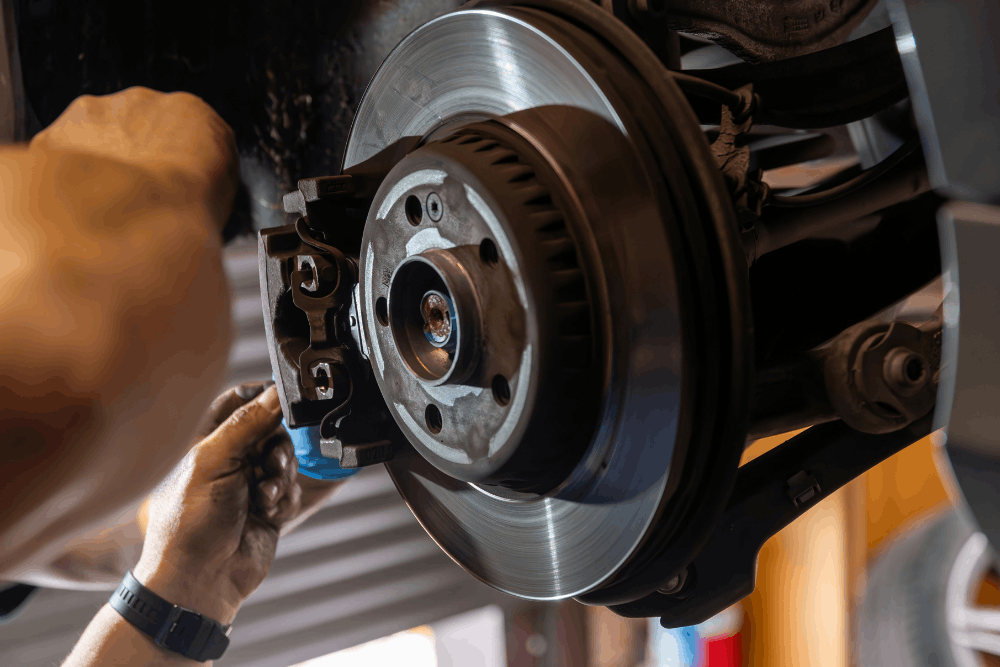
Grinding means the pad is gone. Metal is now contacting metal directly against your rotor. At this point, the rotor itself may be damaged.
At Arvu Auto, we replace rotors, not resurface them. Once a rotor takes metal-on-metal contact damage, replacement is the right call for reliable, long-term stopping performance.
3. Pulling to One Side When You Brake
If your vehicle drifts left or right when you apply the brakes, it usually points to one of these:
- Uneven pad wear: One side has worn down faster than the other.
- Stuck caliper: A caliper that isn’t releasing properly causes drag on one wheel.
- Fluid issue: Contaminated or low brake fluid affects hydraulic pressure unevenly.
This one is a safety issue, not just a comfort issue. Get it looked at promptly.
4. Soft, Spongy, or Low Brake Pedal
A brake pedal that sinks closer to the floor than usual, or feels mushy underfoot, is a hydraulic problem. Common causes include:
- Air in the brake lines
- Brake fluid leak
- Master cylinder wear
If your pedal feels different than it used to, that change is meaningful. Brake hydraulics don’t fix themselves.
5. Vibration or Pulsing Through the Brake Pedal
Feeling a pulsing sensation through the pedal when you brake? That’s almost always warped rotors. Rotors develop uneven surfaces from heat stress over time, and you’ll feel that unevenness through the pedal as they spin under load.
This vibration can also show up in the steering wheel during braking, which adds steering and suspension stress on top of the brake issue itself.
What's Happening Inside Your Brake System
Most drivers know their brakes stop the car, but understanding the basics helps you recognize when something’s really wrong.
Your brakes work through hydraulic pressure and friction. Here’s the short version:
- You press the pedal, which activates the master cylinder.
- Hydraulic pressure pushes brake fluid through the lines to each wheel.
- Calipers clamp the brake pads against the rotors.
- Friction slows the rotor and, with it, your wheel.
Every component in that chain degrades over time. Pads wear thin. Rotors develop surface irregularities. Fluid absorbs moisture and loses its effectiveness. That’s why routine brake inspections matter, especially for Minnesota drivers dealing with temperature swings, road salt, and stop-and-go traffic.
Brake Warning Signs vs. What They Usually Mean
Here’s a quick-reference table to help you match what you’re experiencing to the likely cause:
| What You Notice | Likely Cause | Urgency Level |
|---|---|---|
| Squealing on light stops | Worn pad wear indicators | Schedule Soon |
| Grinding metal-on-metal sound | Pads fully worn, rotor damage | Urgent |
| Pulling to one side | Uneven wear or stuck caliper | Urgent |
| Soft or spongy pedal | Air in lines or fluid leak | Urgent |
| Pulsing pedal or vibration | Warped rotors | Schedule Soon |
| Brake warning light on | Multiple possible causes | Schedule Promptly |
Why Minnesota Drivers Shouldn't Ignore Squeaking Brakes
Minnesota roads put extra stress on brake systems. Road salt accelerates corrosion on rotors and calipers. Freeze-thaw cycles affect brake fluid. And the long stretches of rural highway between towns like Watertown and Cokato mean you’re relying heavily on your brakes performing consistently at highway speeds.
For families heading into the school-year routine, with more daily driving, carpools, and activity runs on the calendar, this is exactly the season to make sure your brakes are in solid shape. A brake inspection takes very little time and gives you a clear picture of where things stand.
What Arvu Auto Checks During a Brake Inspection in Long Lake, Watertown, and Cokato
When you bring your vehicle to Arvu Auto for a brake inspection, our team does a thorough evaluation, not just a quick glance at pad thickness.
Here’s what a full brake inspection covers:
- Brake pad thickness: Measured at all four corners to assess remaining life.
- Rotor condition: Checked for scoring, warping, and surface damage.
- Caliper function: Verified for proper engagement and release.
- Brake fluid condition: Tested for moisture content and contamination.
- Brake lines and hoses: Inspected for leaks, cracks, or wear.
- Hardware and hardware contact points: Checked for corrosion or restriction.
After the inspection, we walk you through exactly what we found. At Arvu Auto, we believe in transparent communication. We’ll explain your options, share what makes sense given your driving goals, and let you make the call. Our technicians will never pressure you into repairs you’re not ready for.
That approach is baked into who we are. Our core values, Articulate, Reliable, Versatile, and United, guide every conversation we have with customers from Long Lake to Cokato to Watertown and everywhere in between.
Ready to get your brakes checked before the school-year rush? Arvu Auto serves drivers across West Metro Minnesota. Schedule your brake inspection at any of our three locations:
- Long Lake: 560 Willow Dr N, Long Lake, MN 55356 | (952) 444-1093
- Watertown: 601 White St SE, Watertown, MN 55388 | (952) 955-2761
- Cokato: 315 Cokato St E, Cokato, MN 55321 | (320) 286-5925
How Long Do Brake Pads Last? What West Metro MN Drivers Should Know
Brake pad life varies depending on driving habits, vehicle type, and road conditions. Here are the general ranges most drivers in this area can expect:
- City/stop-and-go driving: 25,000 to 40,000 miles
- Highway-heavy driving: 40,000 to 65,000 miles
- Towing or hauling (Cokato area fleets and work trucks): Often shorter due to added load stress
These are estimates, not guarantees. Temperature extremes and corrosive road salt common throughout Wright and Hennepin counties can push wear faster than the mileage numbers suggest.
The best way to know where your pads stand is a direct inspection, not a mileage guess.
Why Choose Arvu Auto for Brake Repair Near You in Minnesota
Drivers from Delano, Howard Lake, Montrose, Maple Plain, Dassel, and Darwin trust Arvu Auto because we do things differently.
- ASE-certified technicians: Our team includes ASE-certified technicians who stay current with evolving vehicle technology.
- NAPA AutoCare membership: Arvu Auto is a NAPA AutoCare member shop, which means we meet a defined standard of quality and service.
- Rotor replacement, not resurfacing: We replace rotors when they’re compromised, period. It’s the more reliable long-term fix.
- Solid warranty coverage: Most repairs at Arvu Auto come with a 36-month/36,000-mile warranty. That’s our commitment that the work will hold up.
- Digital Vehicle Inspections: We use digital inspections to share photos and findings with you directly, so you can see exactly what we see. Transparency isn’t just a talking point here; it’s part of how every service visit works.
- No pressure, ever: We make recommendations based on your vehicle’s condition and your goals. The decision is always yours.
FAQs About Brake Repair and Squeaking Brakes
Why are my brakes squeaking when I stop lightly?
Brakes squeak on light stops most often because the wear indicator on the brake pad is making contact with the rotor. This metal tab is built into the pad specifically to create that sound when the friction material has worn low. Catching it at this stage typically means only the pads are due for replacement, before the rotor takes any damage.
How do I know if my brake rotors are bad?
Warped or damaged rotors usually cause a pulsing or vibrating sensation through the brake pedal when you slow down. You may also feel the vibration in the steering wheel, or hear a grinding noise if the rotor surface has been scored from metal-on-metal contact. A visual inspection by a technician will confirm rotor condition and whether replacement is the right move.
How often should brake pads be replaced?
Brake pad replacement intervals vary based on driving style, load, and road conditions, but most pads last somewhere between 25,000 and 65,000 miles. Drivers who frequently tow, haul, or navigate hilly terrain tend to see shorter intervals. A routine inspection at each oil change is the most reliable way to track wear before it becomes a problem.
Can I drive with squeaky brakes?
You can drive short distances on squeaking brakes, but it’s not a situation to stretch out. The squealing is a wear warning, and continuing to drive on low pads risks rotor damage, which turns a straightforward brake job into a more involved repair. Schedule an inspection as soon as the noise appears.
What causes brake fluid to go bad?
Brake fluid is hygroscopic, meaning it absorbs moisture from the air over time. As moisture content increases, the fluid’s boiling point drops, which can reduce braking performance, especially under heavy use. Contaminated fluid can also promote corrosion inside brake lines and calipers. Most manufacturers recommend a brake fluid check every two years as part of routine maintenance.
Schedule Your Brake Repair in Long Lake, MN at Arvu Auto Today
If your brakes are squeaking, grinding, pulling, or just not feeling right, don’t put it off. The Arvu Auto team is ready to help you Drive in Confidence at all three West Metro Minnesota locations.
- Long Lake: 560 Willow Dr N, Long Lake, MN, 55356 | 952-444-1093
- Cokato: 315 Cokato St E, Cokato, MN, 55321 | 320-286-5925
- Watertown: 601 White St SE, Watertown, MN, 55388 | 952-955-2761
We also serve drivers from surrounding communities including Delano, Howard Lake, Hazelton, Maple Plain, Montrose, St. Bonifacius, Lamson, Forest City, Hutchinson, Litchfield, Dassel, and Darwin.